The Baby-Sling Hypothesis
for Human Evolution
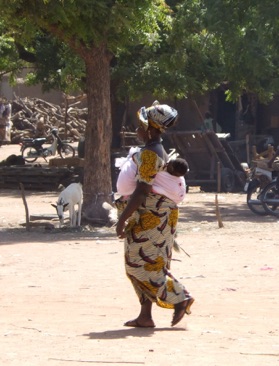
The Baby-Sling Hypothesis
for Human Evolution

Hair Distribution, Immuno-resistance and Adaptations to the First Baby Slings
This essay, which appeared in Anthropologie - International Journal of Human Diversity and Evolution (2013, Volume 51, Issue 3: 349-374), was first disseminated to advance readers in the UK, United States, South Africa and Australia in August 2008. It contains two hypotheses. The first postulates that infectious and parasitic conditions in the first baby-carrying devices or “slings” selected for changes in juvenile hair distribution and immuno-resistance, and that a convergence of datable mutations and osteological changes indicate that infants in our lineage adapted to the microenvironment between 1.2 and 2.8 million years ago - with evidence converging towards the older end of that range. Such slings, which might have been first used to carry gleanings, would have surrounded offspring in dangerous pathogens and parasites. Babies whose fetal body baldness had not disappeared would have had an advantage over infants with previously normal body fur, because adults could clean them better – probably resulting in the neotenic extension of the fetal trait.
The microenvironment might have selected for the elimination of infectious pathways as well. The inactivation of the CMAH gene, which could have provided a pathway for germs associated with ungulate and proboscidean hides to infect infants with deadly diarrhea, is explored as a candidate, and multiple ways of testing the hypothesis are described.
The related hypothesis, which is based partly on avian comparisons and milk chemistry, postulates that slings gradually forced adults to focus on the kind of nutrition needed by more slowly maturing infant brains by making their babies more altricial. This might have triggered more scavenging, hunting, and feedback mechanisms that slowly extended the new juvenile hair distribution to adults as part of a whole-body cooling system based on sweat and body baldness while contributing to speciation.
Even though the paper has been well received by numerous prehistorians and paleoanthropologists*, including the anonymous referees, its contention that infectious environments in the first baby-carrying devices caused selective infant mortality and a founder’s effect, which led to the speciation at the root of our genus, is bound to be controversial.
Please click on the following thumbnail photos, which I’ve used as icons, to see the web pages or PDFs described in the captions.

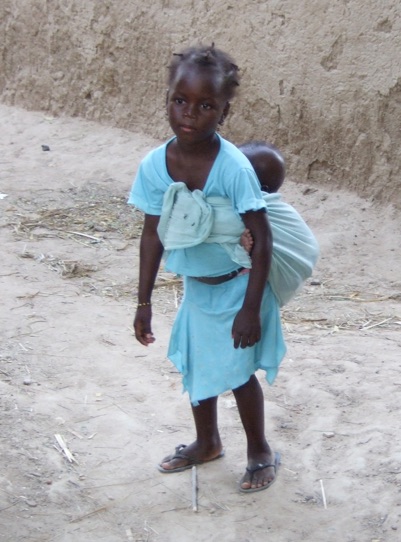
*Comments by advance readers include:
• Robert Bednarik, the editor of Rock Art Research: “I think that your paper is very well argued, but will be hard to ‘sell’, because of its sophistication” (email, 10 Dec. 2008).
• Francesco d'Errico, Director of Research CNRS, University of Bordeaux, France & Honorary Professor, Institute for Human Evolution, University of the Witwatersrand, South Africa: “... I found the idea and integrated interdisciplinary way you deal with the question fascinating. It is certainly worth publishing” (email, 12 Jan. 2010).
© 2008-2014 Duncan Caldwell on text © 2009 Duncan Caldwell on photos
Key words: Baby sling, Baby slings, human evolution, body baldness, evolution of human hair, human hair distribution, human body hair evolution, naked skin, human hairlessness, loss of fur, emergence of large brains, brain evolution, brain expansion, thermoregulatory control, sweat glands, evolution of sweating, aquatic ape theory, Peter Wheeler, Nina G. Jablonski, The Naked Truth, Scientific American, archaeology, paleontology, why humans have no fur, human brain evolution
Other Prehistory Pages


A Murder, Bombing, and Trip to “Dolmens”


The Foz Coa / Coa Valley prehistoric rock art scandal

Coa Valley home page


Expedition Photos

Ancient & tribal feminine imagery

Prehistory home page
Historical & Biographical Pages

Spy Catcher, my father, Robert Caldwell’s, biography